
देवाला काय व का द्यावे? (भाग १, २ आणि ३)
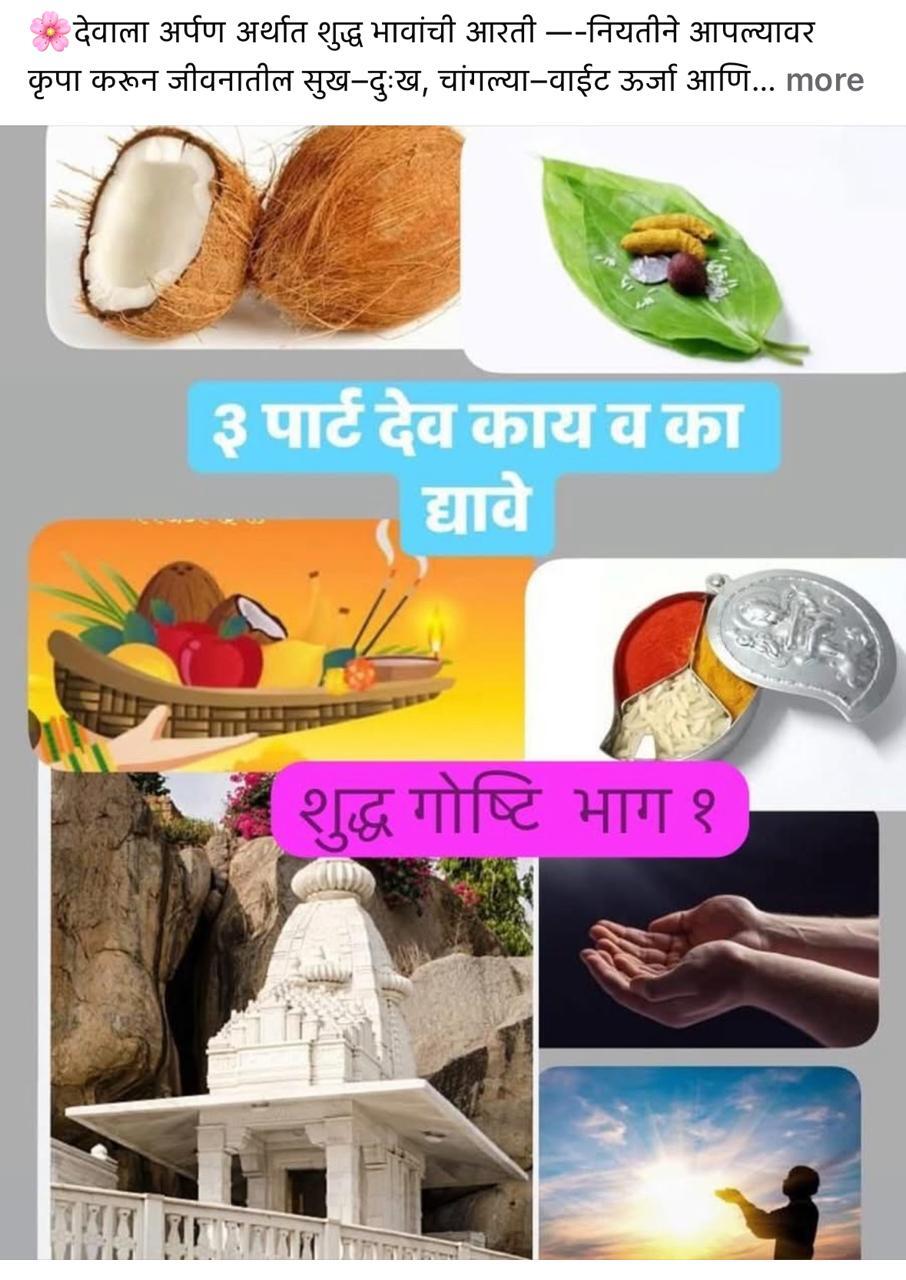
🌸 Offering to God: A Devotional Expression of Pure Feelings (Part 1/3)
Destiny has blessed us with the gifts of joy and sorrow, positive and negative energies, and invaluable life experiences.
Every breath we take, every moment we live, is a gift from God.
Therefore, while offering to God, the भावना —
“I will offer only my best to the Divine”
is what defines true devotion.
✨ Purity in offering is the true form of devotion ✨
The oil used for lighting the divine lamp should be as pure as, or even purer than, what we use for ourselves,
because it is in that light that our inner being is illuminated.
The ghee offered to God should always be pure, sattvic, and untainted.
Artificial substances like Dalda are considered inappropriate in worship.
👑 Offering clothes is a symbol of love and respect 👑
We buy expensive and attractive clothes for ourselves,
but offering a cheap cloth to God merely as a formality is not a sign of devotion.
The cloth offered to God should be thoughtfully chosen, clean, respectful, and filled with devotion.
Because what we offer reflects the adornment of our own heart.
🍃 Naivedya (food offering) is the sweet taste of love 🍃
While offering food to God, ordinary fruits or sweets alone are not enough.
Naivedya is a fragrant expression of gratitude.
Therefore, one should offer the best —
Grapes, pomegranate
Dry fruits
Kheer, payasam
Such pure, sattvic, clean, and lovingly prepared or brought items should be offered.
What we offer is not for God to eat,
but a symbol of our devotion, love, and surrender.
🌼 The ultimate feeling of surrender 🌼
While offering to God,
there should not be a casual attitude like
“it’s okay” or “whatever is available.”
Instead, the feeling should be —
“O Lord, I belong to you; I offer back to you what is yours…
whatever best I have, I place at your feet.”
When this भावना is in the heart,
the offering becomes pure, and devotion becomes complete.
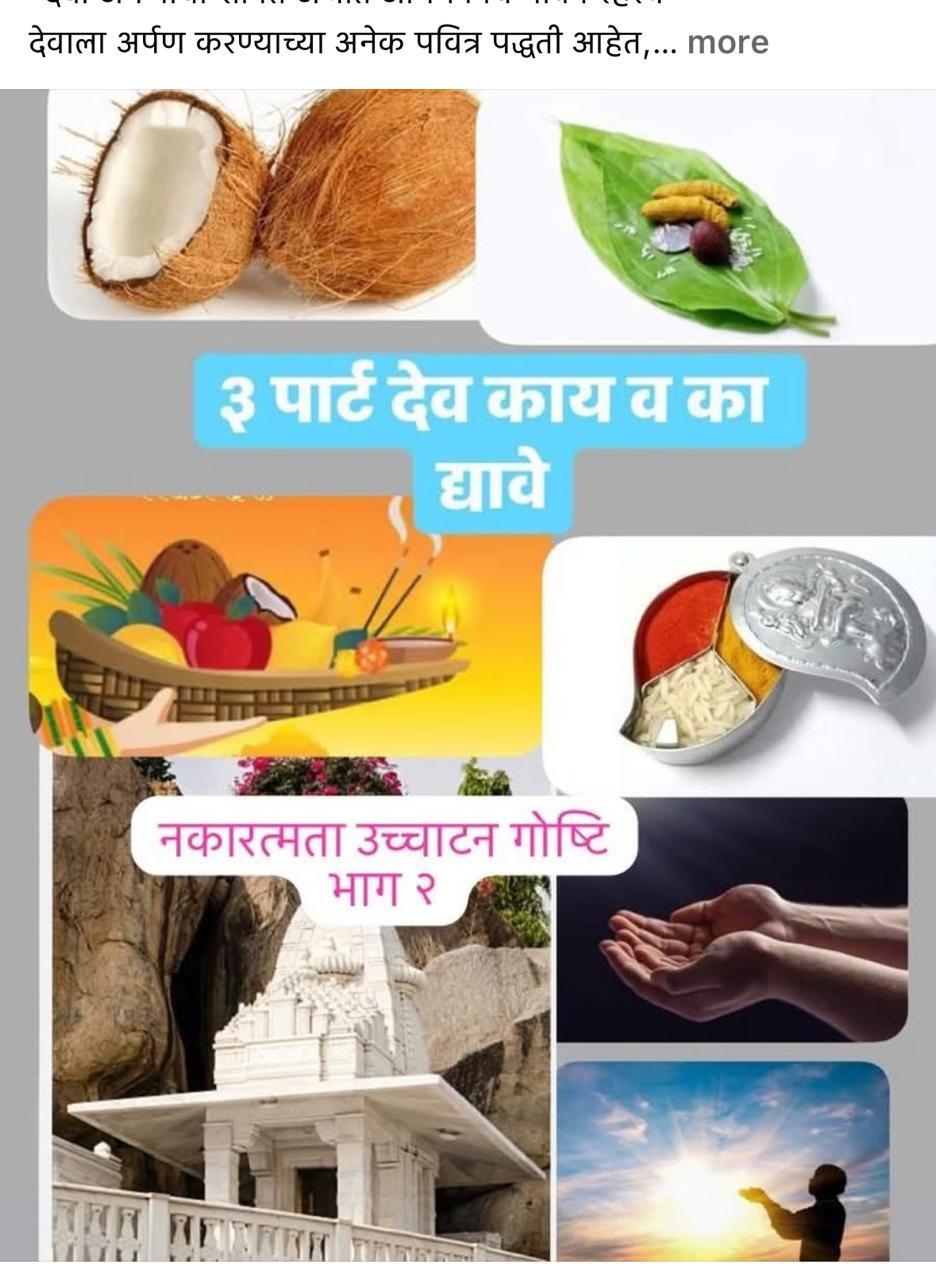
The Power of Divine Offering: The Sacred Mystery of Abhishek (Part 2/3)
There are many sacred ways to make offerings to God. Among them, the simplest and most spiritually rewarding method is the Panchamrit bath and Abhishek.
Abhishek is not merely the offering of substances; in that moment, our energy, our emotions, and our devotion are also offered at the feet of the Divine.
✨ The Purity in Abhishek
Abhishek with Ganga water is considered the most श्रेष्ठ (supreme), because it is filled with purity, positivity, and divine vibrations. However, since pure Ganga water is not always easily available, many other items are used for Abhishek, as they naturally possess the ability to absorb negative energy.
🌿 Items that Absorb Negative Energy
Leaves (banyan or betel leaves)
Betel nut
Coconut
Turmeric and vermilion
Rice (Akshata)
Sugar and jaggery
Flowers
Tulsi leaves
After being offered to God, these items absorb the negative vibrations present in the surroundings or around a person—this is their unique power.
🔱 Changes Observed After Absorbing Negative Energy
🌾 Rice (Akshata)
Becomes heavy and hard after absorbing negativity.
🌰 Betel Nut
The inner white part turns reddish or brown, indicating absorption of negative energy.
🍃 Leaves / Flowers
Leaves turning yellow or flowers wilting quickly suggest they have absorbed negative vibrations.
🍬 Sugar and Jaggery
These become moist and sticky, which is also a sign of absorbing negativity.
🥥 Coconut Water
Sometimes, the water inside a coconut gradually reduces or dries up, indicating that negative energy in the environment has been absorbed or dissolved.
🌸 Conclusion: The True Essence of Offering
In every drop of Abhishek is mixed our faith, devotion, and inner purity. Offering to God means surrendering our body, mind, and consciousness to divine energy.
The things we offer with devotion absorb our sorrows, troubles, and negativity, and in return, make our lives peaceful, pure, and blessed.
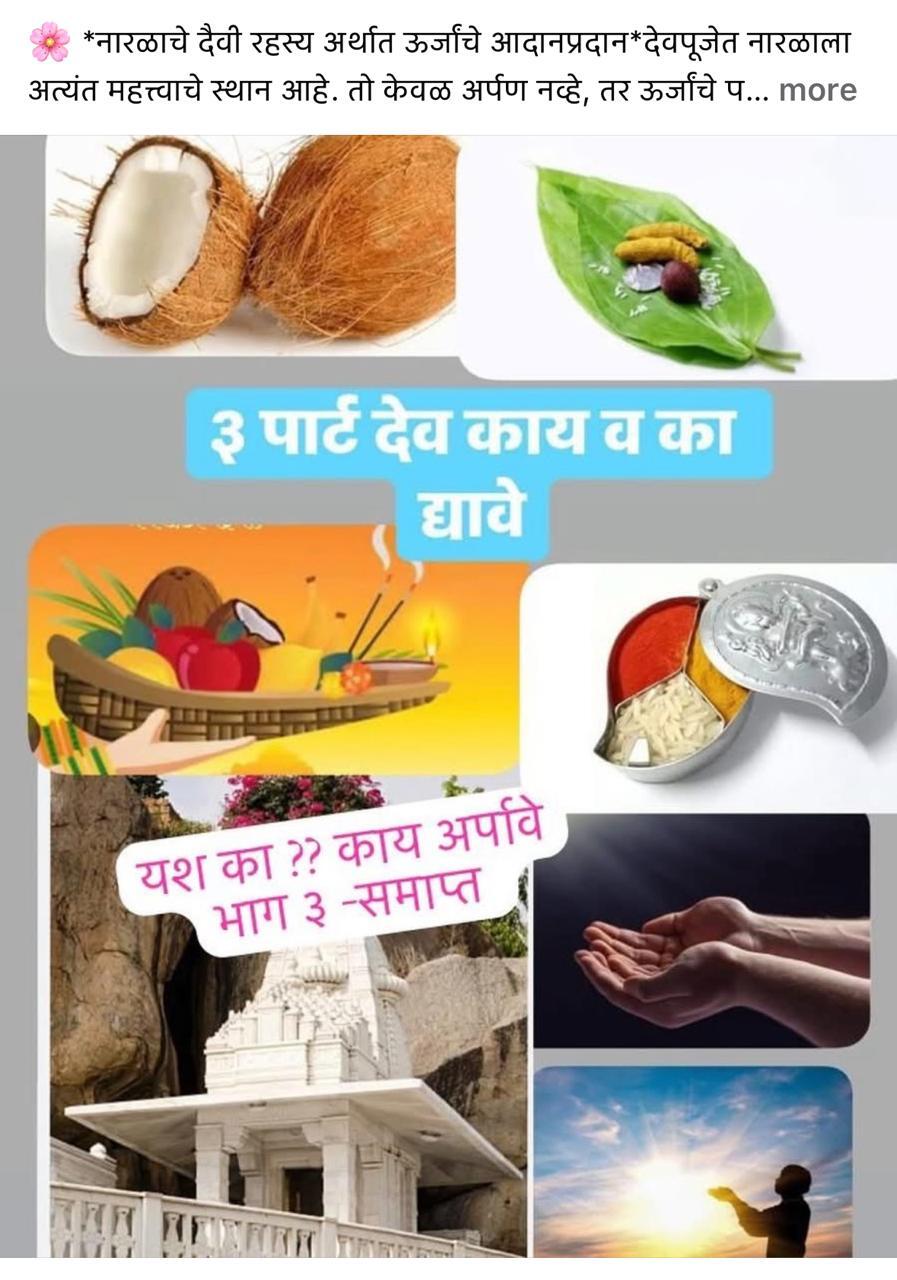
🌸 The Divine Secret of the Coconut: Exchange of Energies (Part 3/3)
The coconut holds a very important place in worship. It is not just an offering, but a sacred carrier of energy.
✨ The Divine Connection Between Coconut and Kalash
In rituals, the coconut placed on the Kalash symbolizes stability, protection, and divine energy.
On days like Amavasya (new moon) or Purnima (full moon), cracks sometimes appear naturally on the coconut, surprising many.
Breaking a coconut requires great force, yet negative energy can create cracks in it easily—this reflects its strong ability to absorb energy.
🔥 Fire — Water — Ocean: Dissolution of Negativity
When a coconut is offered into a sacred fire (havan), set afloat in flowing water, or immersed in the sea, it symbolizes the dissolution of a person’s negative energy into fire or water.
Both fire and water are considered powerful elements of purification.
🌼 Offering a Coconut: Exchange of Energies
Offering a coconut respectfully to a revered person or deity represents the exchange of positive energy.
Through the offered coconut, divine blessings are received, while negative energy is absorbed and transformed by divine forces.
🥥 Which Coconut Should Be Offered?
A fresh coconut should be offered, as it has a higher capacity to absorb energy.
Old, darkened, or overly dry coconuts have reduced ability for energy exchange.
Therefore, offering a fresh and pure coconut is considered more beneficial.
🕉 Offering Traditions in Jainism — A Reason for Prosperity
In Jain traditions, people offer saffron, dry fruits, and high-quality items to the divine.
This purity and quality in offerings is believed to contribute to their success, prosperity, and financial stability.
🌺 South Indian Temples — Discipline in Sacred Offerings
South Indian temples often accept only flowers and monetary offerings.
Their rituals may be costly, but they are performed with discipline, purity, and consistency.
This is one reason why societies in South India are often seen as economically stable, prosperous, and content.
🌸 Conclusion
The quality and purity of what we offer enhance the quality of blessings we receive.